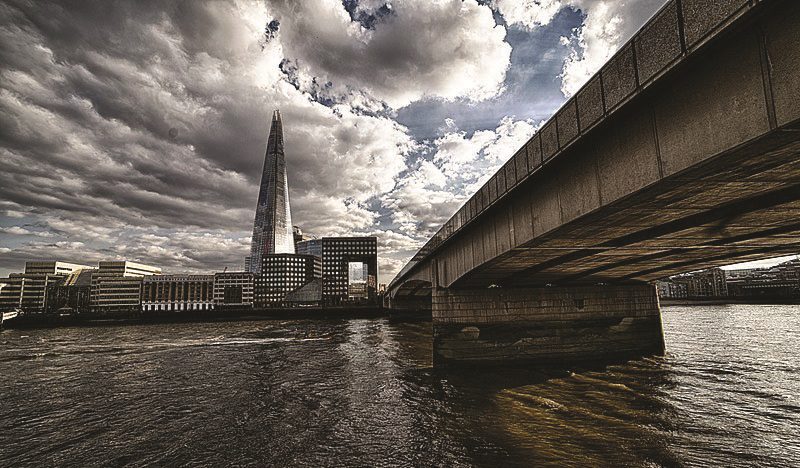
It’s hard not to think of the Shard as always here
When you look at the Shard, do you think: “My god, is it really 10 years already since it was completed and first opened to the public?” or is the more usual response these days: “Only 10 years? It seems to have been with us for decades.”
Without doubt the famous skyscraper feels like the sort of permanent fixture that is embedded in our consciousness now, writes Yann Tear.
It is a part of the cityscape that can’t help but notice from just about every corner of the capital.
And it has probably played a trick on the mind by making most of us feel it’s been there for much longer than it actually has.
That is not to say the building has acquired anything like the affection of older skyscrapers or iconic monuments. It has some way to go before it can even acquire the allure of the Cheesegrater, or the Gherkin.
It is also a building that has not gone without controversy, owing to its Qatari ownership, among other things.
But it stands tall above London Bridge, master of all it surveys, and on February 1, it will be 10 years since it first threw open its 244m high public gallery to the public.
On a clear day, you get a 40-mile panoramic view.
The structure is undoubtedly stunning, however.
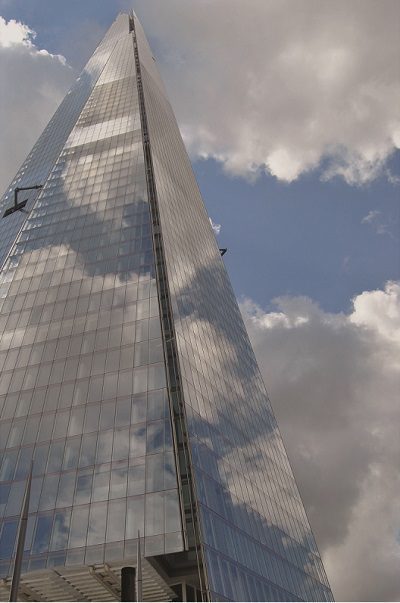
Italian architect Renzo Piano did not make his name by playing safe and it is unmistakable in all its 309.6m glory. In old money, that is 1,016 feet.
It is the seventh tallest building in Europe and houses two dozen floors of offices, along with restaurants, a hotel, exclusive homes and a supermarket.
And don’t forget the obligatory gift shop which still pays homage to Romeo the fox – a legendary beast which roamed the upper reaches of the edifice when it was under construction.

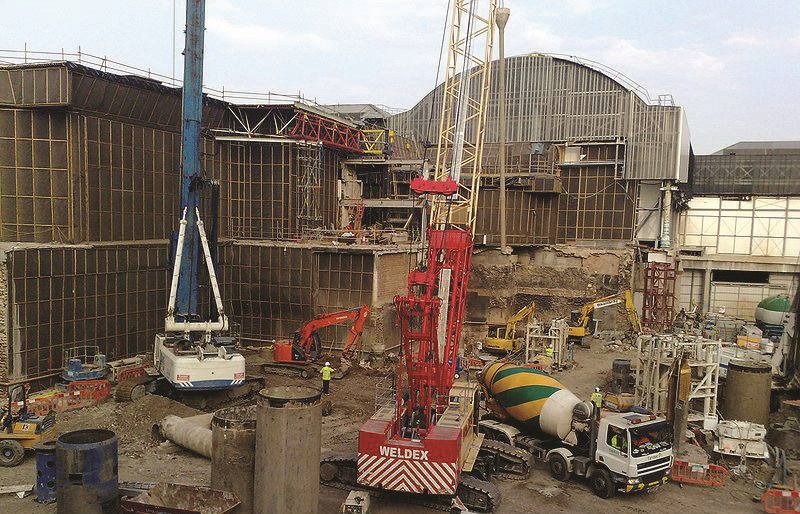
Work began on it in March 2009 and it topped out three years later before completion in November 2012.
But it was not until 2013 that the public could take lifts up to the 72nd floor gallery.
It cost £25 for adults to venture there and £19 for children. Now it is £32. Plus £16 for champagne.
A bit much for a good many.
Romeo the fox survived by eating scraps of food left by builders working on the incomplete structure before he was captured and taken to Riverside Animal Centre in Wallington where he was fed and given a check-up.
Ted Burden, the centre’s founder, said: “We explained to him that if foxes were meant to be 72 storeys off the ground, they would have evolved wings.
“We think he got the message and, as we released him back onto the streets of Bermondsey shortly, he glanced at the Shard and then trotted off in the other direction.”
That story perhaps recalls the book and film about the famous World Trade Centre ‘stowaway’ Philippe Petit – who walked across a tight-rope between the twin towers in the 70s as it neared the end of construction.
He managed to dodge security to achieve his famous feat.
The Shard too has lured its share of crazy adventurers.
Only last month, a free-climber was prosecuted after scaling the Shard.
He told arresting police officers he would come down in two minutes after taking a selfie.
Adam Lockwood, 21, caused mass chaos around London as public services declared a critical incident when he was seen climbing the building.
London Bridge railway station was forced to close a number of platforms which saw mass delays and cancellations to services.
After he was arrested, he uploaded a video to his YouTube channel in which he said: “I’m probably going to prison tomorrow but when I get out my videos will probably get crazier.”
He admitted to causing a public nuisance and a separate offence of burglary and was handed a suspended sentence.
In 2013, a group of Greenpeace activists also scaled the Shard to protest against oil drilling in the Arctic.
The previous year a High Court injunction was obtained by the building’s owners against Alain Robert – the climber nicknamed the French spiderman – to stop him attempting to scale it.
Picture: The Shard and London Bridge Picture: Wikimedia Commons/Robert Dimov