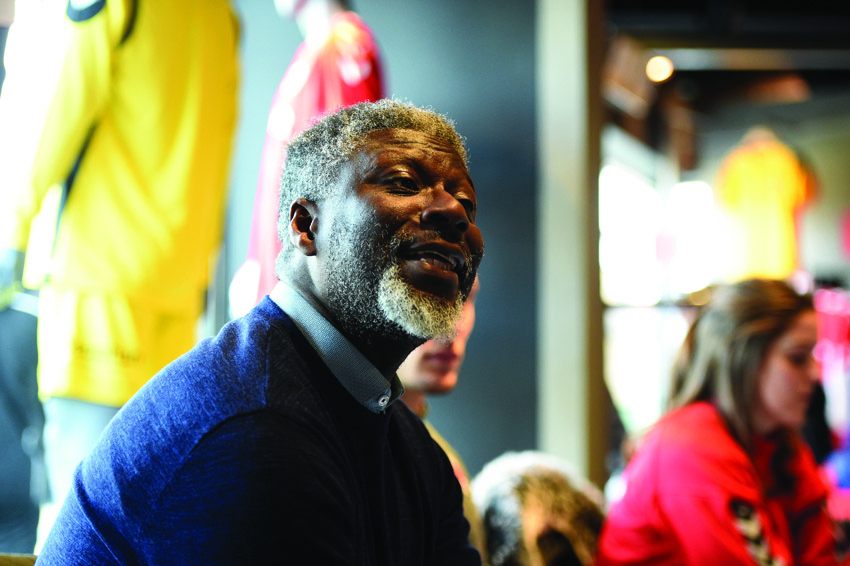
Charlton Athletic favourite found it tough to hand up his boots but admits: “I’ve learned there is more to life than football”
Charlton legend Paul Mortimer admits he found it really tough being forced out of football by injury all those years ago – but takes pride in having contributed so much to the game since quitting.
The midfielder, who had two spells at the Valley between 1987 and 1999, gracing the midfield in the old top-flight days, was 31 when he was forced to admit defeat because of back injury, and still remembers how terrible that felt.
“You feel powerless. Life starts again and it’s difficult to deal with, at first,” he said. “I found it mentally and emotionally difficult that I wasn’t able to quit on my own terms.
“Most people at Charlton still talk about my injuries when they see me, and it’s a shame people have that memory of me because I felt I played quite a lot of good football.
“People also thought it was mainly hamstring strains I suffered from, but really it was a back problem,which I think could have been cleared up much more easily now than it could then. But you just have to get on with it and realise, as I have done, that footballers have a lot of transferable skills, such as knowing how to cope with pressures and working within teams.that has stood me in good stead.”
That certainly seems to be the case for Mortimer, who turned 50 last year. He runs a private counselling business in New Cross, but remains heavily involved in his first love, which is hardly surprising given the fact he played more than 200 times for the Addicks and also enjoyed spells at Aston Villa, Crystal Palace, Brentford and Bristol City.
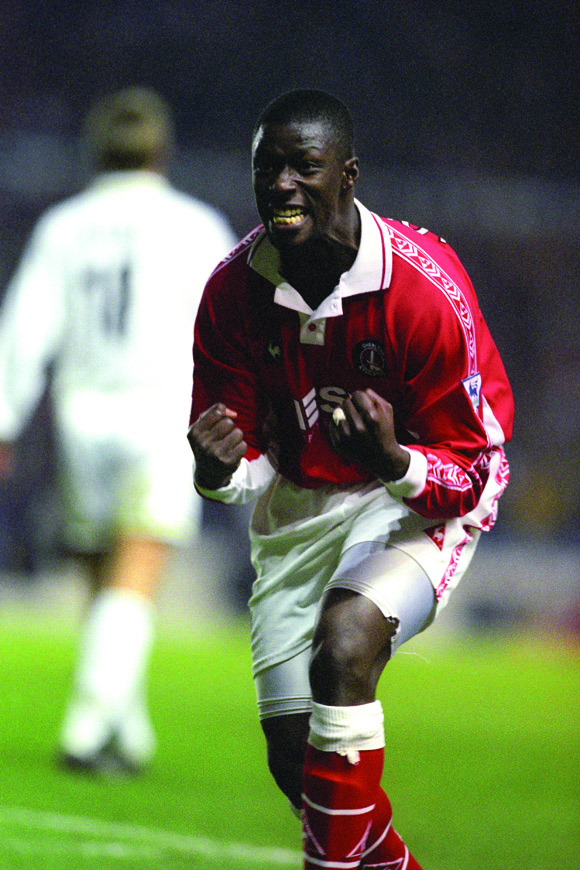
As well as coaching alongside Leroy Rosenior in Sierra Leone, and overseeing the Charlton women’s team for five years, he has worked for pressure groups Kick it Out and Show Racism the Red Card.
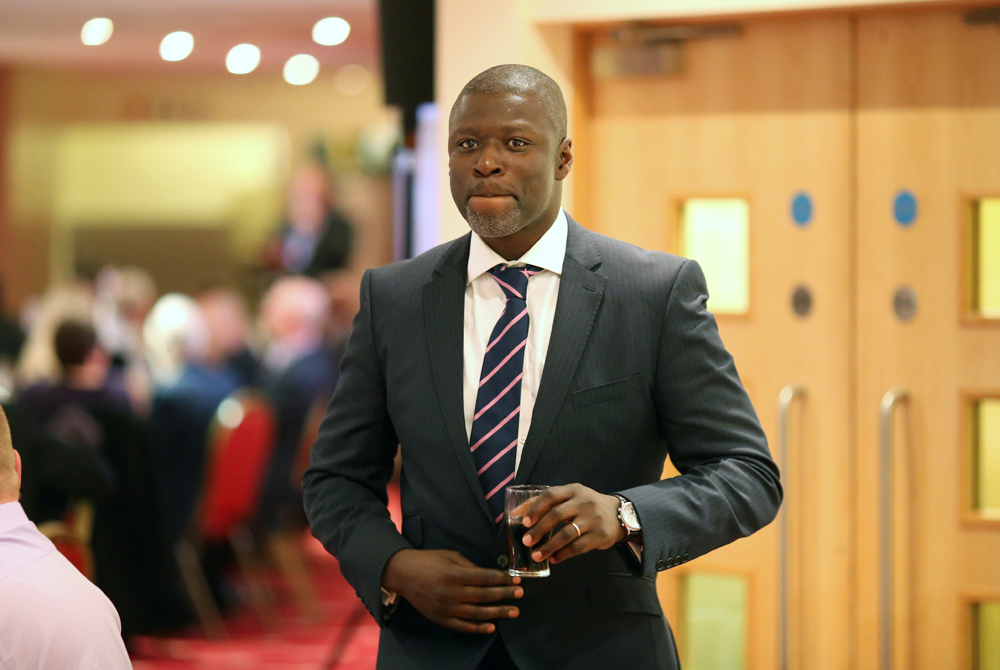
He was at the Valley for the Southend match, as patron for the Proud Valiants group which promotes inclusiveness and raises awareness of homophobia. It is the third year a Charlton matchday has been dedicated to the cause as part of the work undertaken by the club and Charlton Athletic Community Trust, to tackle homophobia in football – both on the pitch and on the terraces.
Proud Valiants hosted a post-game reception which included a talk on diversity from Mortimer.
“Football is for everyone and should be a place where people can be themselves. It is better than when I played, even if there is still much to be done. There is a greater understanding of the way vocabulary can be damaging and shouldn’t just be dismissed as banter.
“In the same way that the N word is unacceptable, there are words that should not be tolerated relating to sexual orientation, and raising awareness of the negative impact is vital.”
His energy to the cause is proof that he takes his own post-playing days mantra seriously. “I think after the injury, I realised there is always more to life than playing football and if there is one thing I’d encourage young players today, it is to recognise that fact.
“Players sometimes find it so difficult adjusting once they stop playing, but there are so many other ways you can be involved. I know Bill Shankly once said football is much more serious than life and death, but of course he was wrong.”
Mortimer has no hesitation in naming his greatest and worst moments with Charlton, and in his football career as a whole, because they centre on the same epic moment in the club’s history.
Watching from the stands at Wembley Stadium on that amazing day when the Addicks beat Sunderland on penalties in 1998 after a crazy 4-4 draw, Mortimer had very mixed emotions.
He felt great joy that his team were promoted to the Premier League, but at the same time felt wretched that he had missed out on one of the greatest matches ever played at the old national stadium.
“It was undoubtedly the worst moment for me, missing out in that match,” he said. “That season was one where I’d had so many spells out with injury, although I did play a part in the play-off semi-final against Ipswich.
“For the final, I wasn’t picked for the bench and the manager made the right decision because I wasn’t fit enough. But I still remember talking to Sunderland’s Niall Quinn before the match, who I’d known since we were kids, and him telling me: ‘It’s such a shame because someone like you deserves to grace this stadium.’
“They were the most emotional times for me because I was ultimately so delighted for the team, but really disappointed not to be part of such a great occasion.
“I think that during the whole of my second spell at the club, I was only 50 or 60 per cent fit. I couldn’t sprint, and although I always trusted my ability, I couldn’t trust my body.
“I’d get in an hour and a half ahead of the others to do remedial work, like stretching exercises, but on the very next run, I’d feel something.
“I worked so hard to try and recover full fitness. No-one could have worked harder. I was so frustrated not to be able to show what I could really do.
“In the end, though, it was a great ride. I enjoyed so many happy times at the Valley, and can’t really complain. Charlton is a place past players want to come back to. It’s that type of club and always has been.”