History of the world in a museum is only natural
April 1881 marked the opening of what would become a world-class visitor attraction and leading science research centre, writes Claudia Lee.
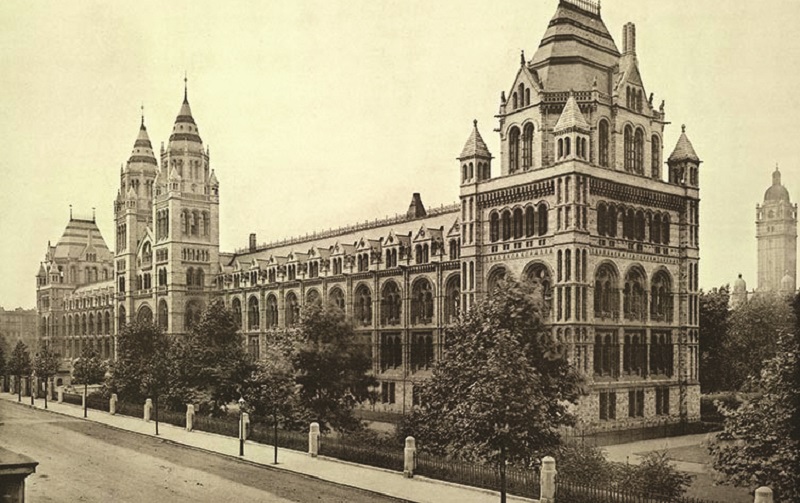
The Natural History Museum in South Kensington opened its doors on April 18 of that year.
However, its origins stretch back to 1753 and the career of doctor and collector, Sir Hans Sloane.
Sloane travelled the world collecting natural history specimens and cultural artifacts as he went.
After his death in 1753 his will allowed many of his collections to be brought by Parliament.
This included more than 71,000 items for only £20,000, a significantly lower price than the estimated value.
After the Government purchased the collection the British Museum was built to display them for the public.
The Natural History Museum was part of the British Museum until 1963 when a separate board of trustees was appointed.
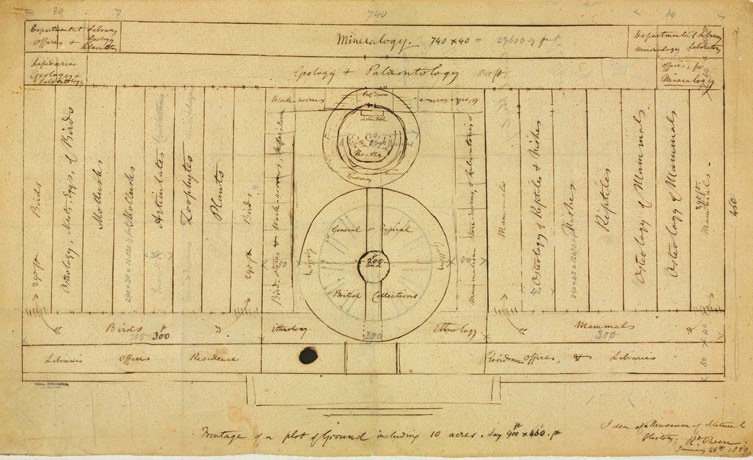
Richard Owen became the first superintendent.
He aspired to create a cathedral for history and nature that anyone would be able to visit for free.
He worked with the architect Alfred Waterhouse to create the iconic building.
Interestingly, the gardens surrounding the building were an area set aside for future expansion of the museum, but due to a lack of funds the building kept its smaller design and the gardens were adapted and landscaped to become their own feature and tourist attraction.
During the First World War, the museum turned part of these gardens into allotments and a farm that grew artichokes, potatoes, cauliflower and other green crops.
The farm also had chickens, rabbits and eight pedigree black Sussex pigs.
The gardens had other practical uses too, including as a burial site for whale carcasses between 1913 and 1938.
The carcasses were left to decompose so that their skeletons could be added to the collection.
The gardens will continue to change as part of the Natural History Museums Urban Nature Project which includes doubling the wildlife habitat on the grounds.
These gardens are now a site of scientific development that is studying the tools and skills needed to protect urban nature.
The Museum currently cares for more than 80 million objects that trace that history of billions of years and are viewed by more than five million visitors annually.
The historic Kensington building also employs 900 staff across a variety of roles to care for the ever growing collection of natural history specimens.
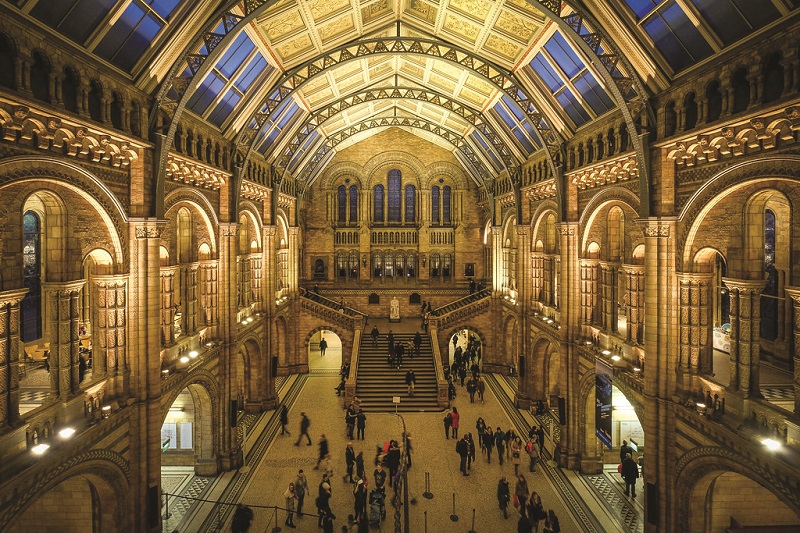
The Museum’s central space was redeveloped in 2017.
The Diplodocus skeleton cast was replaced with a 25.2-metre blue whale skeleton.
The change intended to be a reminder to visitors that humanity has a responsibility to protect the biodiversity of our planet.
Picture: The Museum in 1900