Settlers went from Tilbury to tunnels
Why is His Majesty’s Troopship Windrush so important in our island’s history? TOBY PORTER writes about the crucial history of the ship, its life as a Nazi propaganda vessel before the Second World War, its war service, and how it eventually came to sink.
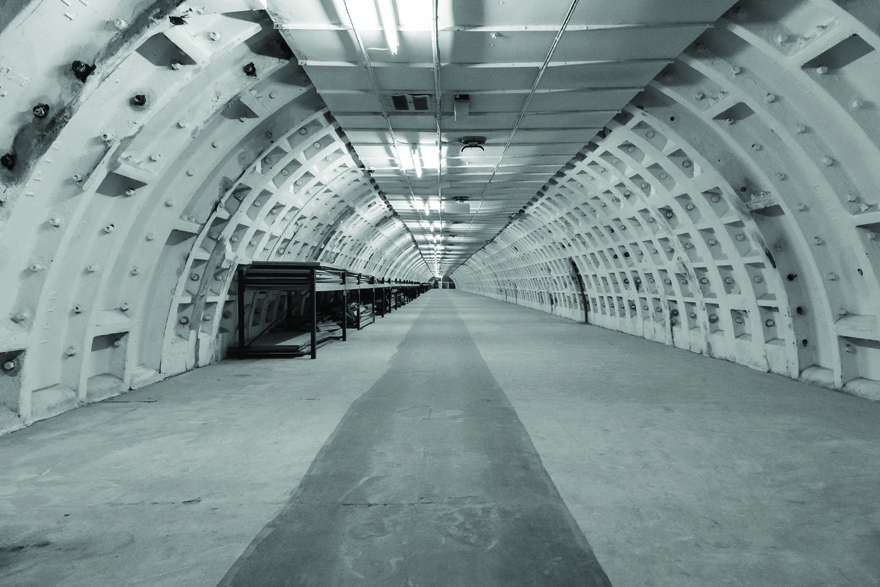
Low tunnels under Clapham South Tube station – empty but for some bunk beds and scattered furniture – are a crucial landmark to why Windrush Day is so important to South Londoners.
They were home and shelter for a few vital months for many of the families which ended up staying here after arriving on these shores in His Majesty’s Troopship Empire Windrush.
The shelters were built between 1940 and 1942 and were used to house up to 8,000 people during the air raids of the V-1 and V-2 bombs in the latter years of the Second World War.
The tunnels closed in May 1945 and was subsequently used as a military and civilian hostel.
The subterranean shelters also housed Jamaican people who arrived on the HMT Empire Windrush in 1948, as well as in 1951 during the Festival of Britain, providing accommodation for large numbers of tourists and children who arrived in London.
On April 15, 1948, a small advertisement was placed in a Jamaican newspaper announcing a passenger opportunity to sail to the UK.
Tickets were £28 (equivalent to around £1,000 now).
The 8,000 mile journey from the Caribbean to Tilbury Docks in Essex took 30 days.
The Windrush dropped anchor on June 21, 1948.
On that first trip, the ship’s records show 802 passengers gave their last place of residence as a country in the Caribbean.
Many of the newly arrived families used the nearest Labour Exchange, in Brixton, to find the work they craved – as their native Jamaica was suffering a recession.
And a large portion ended up finding jobs and homes there.
Among the passengers was Sam Beaver King, who was travelling to the UK to rejoin the RAF.
He would later help found the Notting Hill Carnival and become the first black Mayor of Southwark.
There were also the calypso musicians Lord Kitchener, Lord Beginner, Lord Woodbine and Mona Baptiste.
RAF officer John Henry Clavell Smythe, on the ship as a welfare-officer, later became Attorney General of Sierra Leone.
Also on board was Nancy Cunard, heiress to the Cunard shipping fortune, who was on her way back from Trinidad.
Former teacher Laura Steele of education resources experts PlanBee explains that those who took the brave decision to leave their homes in the Caribbean in 1948 laid the foundations of modern Britain.
She said: “In 1948, Britain was just beginning to recover from the devastating effects of the Second World War. There was a huge shortage of labour.
“The arrival of the Windrush passengers was a landmark event and it marked the start of many more people from British colonies, including India, migrating to the UK.”
Pic: The tunnels below Clapham South Tube station