‘We were good men’: The extraordinary bravery of the SAS
By John Dekhane
During the Second World War, countless British heroes sacrificed everything they had to defeat tyranny, leaving behind their families, their homes and their dreams.
Battle after battle, mission after mission, they faced unimaginable danger, marching into hell for a cause greater than themselves.
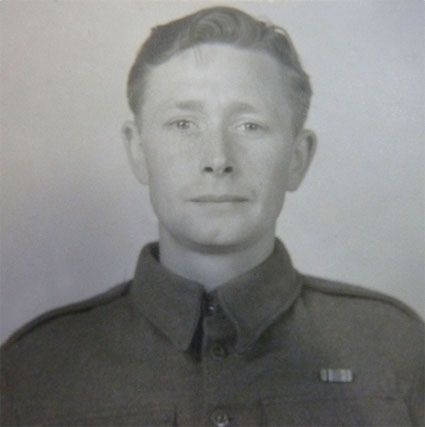
Among those who went off to war but never returned was Private Reginald Stanley Church – a 24-year-old British soldier with so much to live for.
Reginald was born on April 20, 1920, in West Norwood. He grew up in the neighbourhood he loved dearly, with busy streets, familiar faces and a strong sense of community that pulsed through Lambeth.
Reginald was the son of Henry Thomas Church, a London Transport bus inspector, and Charlotte Louisa Fuller.
He had eight siblings – Lilian, Edward, William, Douglas, Henry, Barbara, Dorothy and Maurice. Their home was filled with laughter, shared meals and the constant noise that comes with a bustling household.
In 1939, Reginald was working as a cricket groundsman, and living with his family at 18 St Denis Road, West Norwood.

Reginald joined the British Army, and through determination and dedication, he was selected to serve in one of the most elite units -the Special Air Service (SAS), known for its extraordinary bravery and audacity in the face of impossible odds.
In October 1942, Adolf Hitler issued the infamous “Commando Order,” declaring that Allied commandos captured in combat would be executed without trial, regardless of uniform or surrender.
It was a declaration of barbarism, stripping away every protection offered by the Geneva Convention. This order turned heroic missions into death sentences.
In 1944, Reginald was deployed in Operation Loyton, a daring SAS mission deep in the Vosges mountains of Nazi-occupied France.
The mission, meant to support advancing Allied forces, turned into a desperate struggle for survival.
With supplies running out and no hope of reinforcement, the team was ordered to split into smaller units and somehow make their way back to
Allied lines. Sadly, 31 members of the SAS would be taken prisoner and murdered by the Germans. Among them was Private Reginald Church.
After being captured, he was briefly imprisoned at Saales, in the Bas-Rhin department. On October 15, 1944, Reginald and seven fellow SAS soldiers were taken to an isolated forest near La Grande-Fosse.
Reginald was the first to be led off the truck, forced to stand before a freshly dug grave, a single shot rang out. Each man followed in turn.

The last man, Private Edwin Weaver, turned to one of his executioners and said something in English.
On the way back, the German soldier was asked what Weaver had said, and the answer was: “We were good men.”
Reginald’s body was recovered after the war, exhumed from the mass grave, and reburied with honour at Durnbach War Cemetery in Germany, a resting place for 2,934 Commonwealth heroes who died for our freedom.
He lies now beneath the quiet earth, where flowers bloom and flags wave gently in the wind.
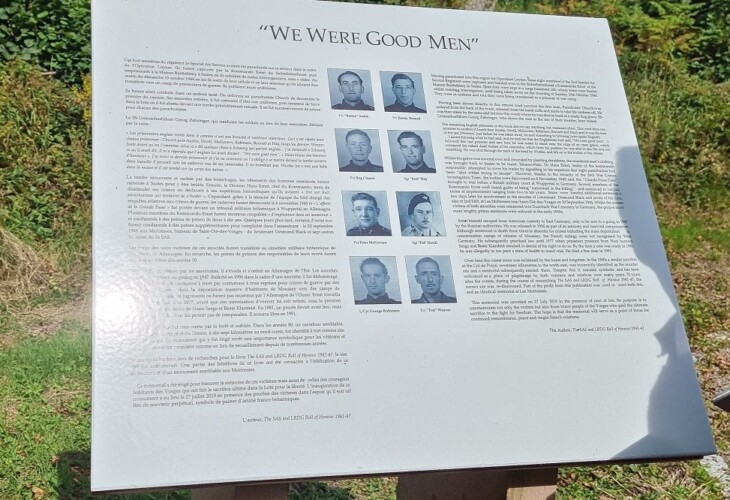
Today, at La Grande-Fosse, a beautiful memorial stands on the very site where Reginald and his comrades were executed.
Their names and photographs are displayed there, surrounded by a forest that will forever bear witness to their courage. Reginald is also honoured at the David Stirling Memorial near Doune, in Scotland. Additionally, his name is commemorated at the National Memorial Arboretum in Staffordshire, England—a place of reflection and remembrance.
But beyond having his name engraved on Memorials, Reginald’s spirit endures in the world he helped shape.
Pictured top: (Picture: John Dekhane)