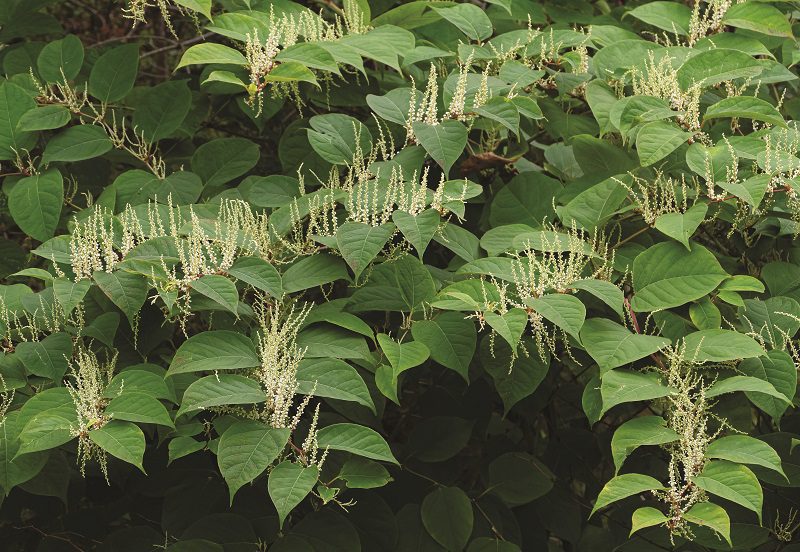
Untangling all the knot in knotweed
Keen gardeners and horticulturists in South London are being urged to help curb the spread of invasive plants as part of their autumn maintenance plans.
The Property Care Association has some tips to help contain a range of non-native weeds and prevent their potentially damaging spread.
Dr Peter Fitzsimons, the technical manager of the PCA’s Invasive Weed Control Group, said: “Invasive non-native plants come in many different forms and sizes.
“Most started out life as garden ornamentals but have taken off to some degree or other in to the wild and are now covered by Schedule 9 of The Wildlife and Countryside Act 1981.
Guidance from the PCA includes; Annual plants, with seeds dispersed by wind e.g. Himalayan balsam.
Management of Himalayan balsam should be done by trimming or pruning, which will ensure the plant is unable to produce the flower and seed pods.
If are seeds present in the soil, they will germinate in the spring but try to remove these by pulling/hoeing.
Perennial (woody shrubs) plants that produce seed attractive to birds etc. (e.g. cotoneaster, Japanese rose).
Keep in check by pruning and thinning, which will reduce the amount of seeds and fruits that can be dispersed by animal vectors.
It may seem a bit perverse to deny wild birds a readily available food source for the winter months but the potential harm these plants can cause in the wild should not be underestimated.
Perennial plants that spread by underground rhizomes, stolons or bulbs e.g. Three-cornered garlic, Montbretia, Variegated yellow archangel.
Lift and thin, taking care to sieve the soil to remove excess bulbils etc.
Avoid unintended dispersal outside the garden through the disposal or transfer of soil which still contains the bulbs and root fragments or, in the case of Variegated yellow archangel, stems and stolons which can self-propagate.
Perennial plants; seeds dispersed by wind e.g. Buddleia.
Although not a ‘Schedule 9’ plant, it is non-native and causes both ecological displacement and can affect buildings and built structures.
Seed dispersal can be limited by removing seed heads in the autumn (bagged and placed in the correct bin) and mature plants can be pruned heavily each winter.
If complete removal is needed the plant can be cut down to the ground and ‘Ecoplugs’ or similar applied to the stump (please read label precautions before use) stopping new shoots appearing in the spring.
Picture: Japanese knotweed Picture: Wikimedia Commons/W Carter