Exhibition: Avant-garde artist Sophie Taeuber-Arp’s wide ranging body of work
Avant-garde artist Sophie Taeuber-Arp once spoke about her wish to create beautiful things – and, looking at her retrospective at the Tate Modern, she succeeded in this many times over.
The exhibition charts her creative life chronologically from her days as a fine and applied arts student to her tragic early death.
It brings together more than 200 objects, ranging from textiles to stained glass to sculpture – all of which are imbued with TaeuberArp’s playful and skillful hand.
After studying fine and applied arts in Munich, Taeuber-Arp began her career in Zurich which was an international hub for the avantgarde during the First World War.
She became a successful textile practitioner and teacher while experimenting with non-figurative art.
The work on display from this time includes cushions, rugs, jewellery and beadwork, each with a rich colour palette and simple but perfectly assembled shapes.
In contrast to her contemporaries, Taeuber-Arp’s abstract shapes came from the grid structures already present in textiles, rather than starting from life and deconstructing the forms present.
By the end of the war, TaeuberArp had become active within Zurich dada, the short-lived but influential artistic movement which sought to integrate art and life, embracing abstraction and absurdity.
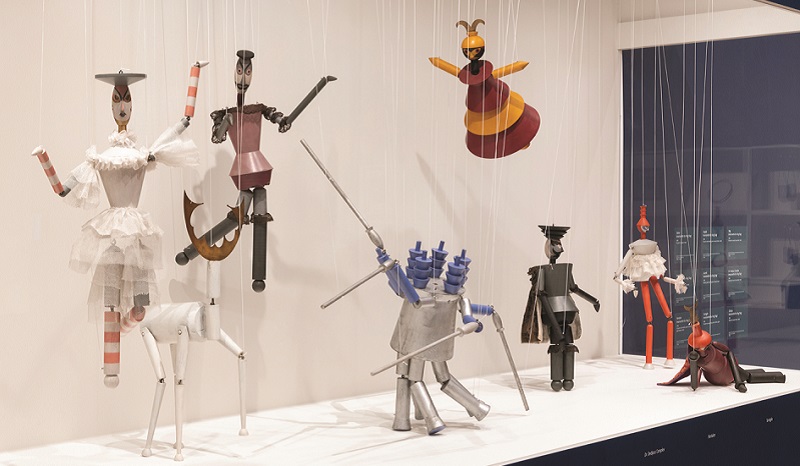
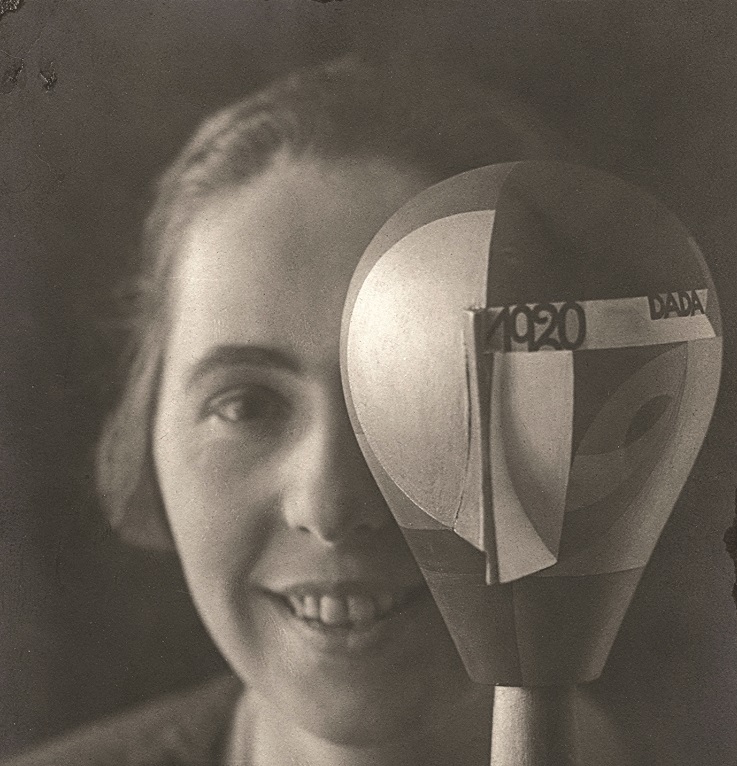
Her turned-wood Dada Heads are some of the most iconic artworks of the era. She also embraced the performative side of dada, marionettes for the avant-garde interpretation of the play King Stag.
Each one is made from simple wooden shapes and small pieces of cloth, but are elegant and expressive.
In the 1920s Taeuber-Arp embarked on experimentation with architecture and interior design for private houses and public buildings.
The commercial success of her architectural practice enabled Taeuber-Arp to design her own studio-house near Paris, which would become a focal point for international intellectuals such as Tristan Tzara, Max Ernst and James Joyce.
Taeuber-Arp returned to painting in the late 1920s and went on to translate these ideas into a series of painted, turned-wood reliefs.
Fleeing Paris at the outbreak of the Second World War, Taeuber-Arp turned to drawing as one of a few means of artistic expression available to a displaced artist.
The final room of the exhibition brings together the works she made while on the move and in exile, created before her tragic accidental death in 1943 aged 53.
These works embody her lifelong interest in abstraction, her constant development of new ideas, and her ability to embrace new materials and methods in a way that remains hugely influential for artists today.
The exhibition offers a new look at Taeuber-Arp and her wide ranging body of work, which is both pleasing to the eye and delightful for the mind.
https://www.tate.org.uk/whats-on/tate-modern/exhibition/sophie-taeuber-arp