Doctor urges people to get Covid vaccine after “harrowing” death of elderly man
By Julia Gregory, Local Democracy Reporter
A doctor who held the hand of an elderly man dying from Covid has urged people to get vaccinated to prevent other people going through the “harrowing” illness.
Dr Umar Ebrahimsa, a specialist registrar in infectious diseases and general medicine in London, told an online community gathering about caring for the seriously ill man.
He was unable to see his wife of 50 years because of the infection as he lay suffering in a small hospital ward.
“They were alone, the medical and nursing staff were there with them and they knew they were not doing well.
“For me that was harrowing to see this gentleman so noble at the end of their life and that is the problem,” said Dr Ebrahimsa.
“We do not know who is unwell and I wouldn’t want anyone to have this problem, so I don’t think it’s fair to expect people to take on this burden by themselves without taking hold of the means we have at hand when we can safely and reasonably and reliably protect people, and that’s the reason why we shouldn’t allow the virus to rip through our populations.”
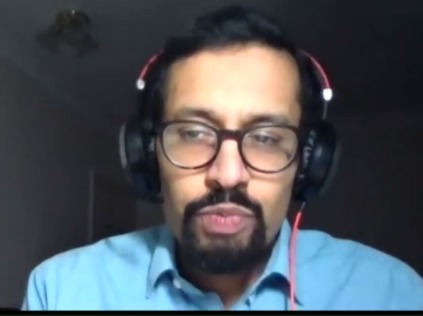
He said we need to get at least 70-80 per cent of the population immune to this virus to “get on top of this problem”.
His testimony from a patient’s sickbed came as doctors and community leaders joined together to answer people’s concerns about the coronavirus and help reduce high rates of infection in north Kensington.
The move follows worries that some vulnerable people, including some from ethnic minorities who have been hard hit by the pandemic, are anxious about getting the jab.
Whilst cases of coronavirus are dropping in Kensington and Chelsea rates in the north of the borough are still higher.
It’s seen high rates in some of the borough’s most deprived wards of Golborne, Dalgarno and Notting Dale, with St Helen’s and Colville not far behind.
More than 140 people joined a recent online event organised by the Al Manaar Muslim Heritage Centre to answer people’s questions about the roll out of the coronavirus vaccine.
There are plans for similar online community events.
Al Manaar CEO Abdurahman Sayed said: “There has been some confusion and conspiracy theories around Covid-19 and the vaccination and that is worrying.”
Samira Ben Omar who is assistant director of equalities for the Central West London Clinical Commissioning Groups said: “The real epidemic in what Covid is doing to our communities is misinformation.”
She urged people: “Before you share it with others make sure you check it on scientific advice. We have a duty with our communities that we share things that are accurate.”
Dr Yasmin Razak from the Golborne Medical Centre who is leading the vaccination programme in north Kensington, said: “It’s all safe and it’s effective.”
She added: “One dose will reduce your risk of dying.”
She stressed that patients would be screened for any allergies to the ingredients in the Pfizer vaccine, which are “very very rare”.
Dr Sarah Elkin, a respiratory consultant working at St Charles Hospital in North Kensington and St Mary’s hospital told residents: “I feel strongly that the vaccine is one thing that will help the community get back to normality.”
Dr Elkin had coronavirus herself last March and had the coronavirus vaccine recently.
“I jumped at the chance of having the vaccine,” she said.
“I was scared on becoming unwell. I’ve seen how this disease can really affect people. People become ill, we had a tsunami of patients coming in who were breathless, unwell, and it was scary for them to be alone.”
“This can affect everyone at every age, that’s why it’s so important we address this.”
She said it’s a myth that young people can’t get the virus.
And she added: “Please do not be scared of hospitals. The treatments are much better and people go home.”
“Do encourage your neighbours, do encourage your friends,” said Dr Razak.
“We would really like everybody to help us get this community immunity.”
People also wanted to know why there is a 12 week gap in vaccination in the UK.
Dr Ebrahimsa said the gap was helping to deal with a shortage of the Pfizer vaccine over the next few months.
He explained that the Oxford AstraZeneca vaccine showed that the vaccine “appeared to have a greater efficacy” after 12 weeks during trials of the vaccine.
And said the first Pfizer vaccine gives people around 90 per cent protection, with 70 per cent with Astra Zeneca from the first vaccination.
And he stressed that there had been no reports of side effects with the 45,000 people in the medical trials and the 5m people who have been vaccinated.
He also debunked the myths that the vaccines contain pork or cells from an unborn foetus.
He stressed the vaccine “does not contain any human cells whatsoever.”
And he explained the Pfizer vaccine is completely synthetic.
Dr Manpreet Bains who is helping vaccinate people said: “We know that Covid 19 has really shone a spotlight of deprivation.
“People living in high risk areas puts them at more risk of covid .We really want to see equity of vaccination.”
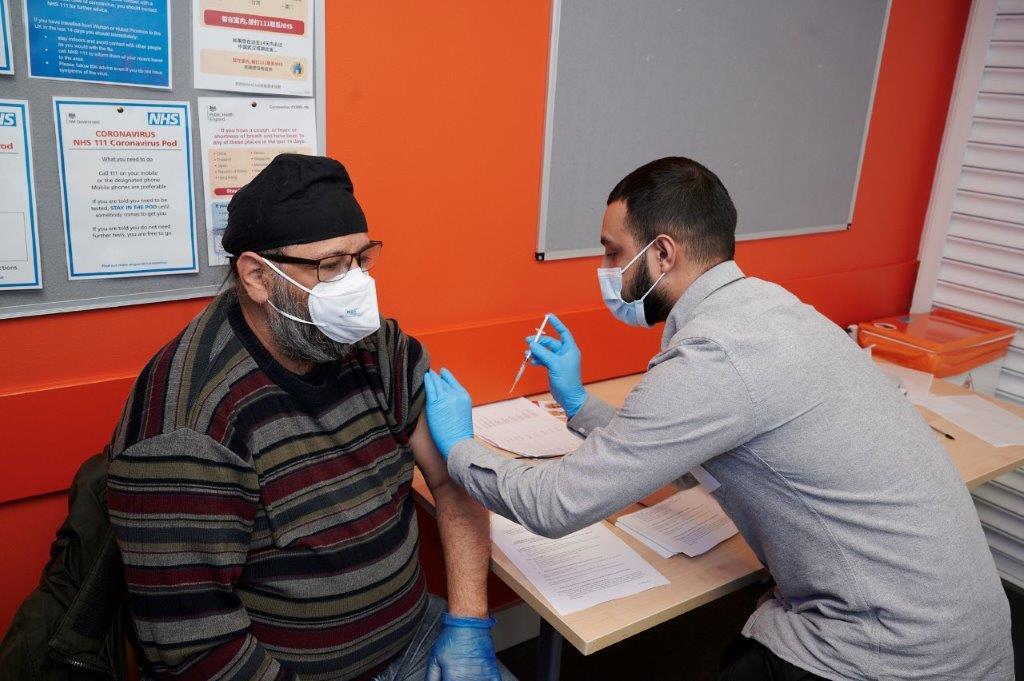
Pictured top: Tameem Kalam vaccinates Jagdeep Dua, at St Charles Hospital