Use of Wandsworth food bank rockets by one-and-a-half times national average during coronavirus outbreak
By Sian Bayley, Local Democracy Reporter
The number of families using a food bank has rocketed – at one-and-a-half times the national average.
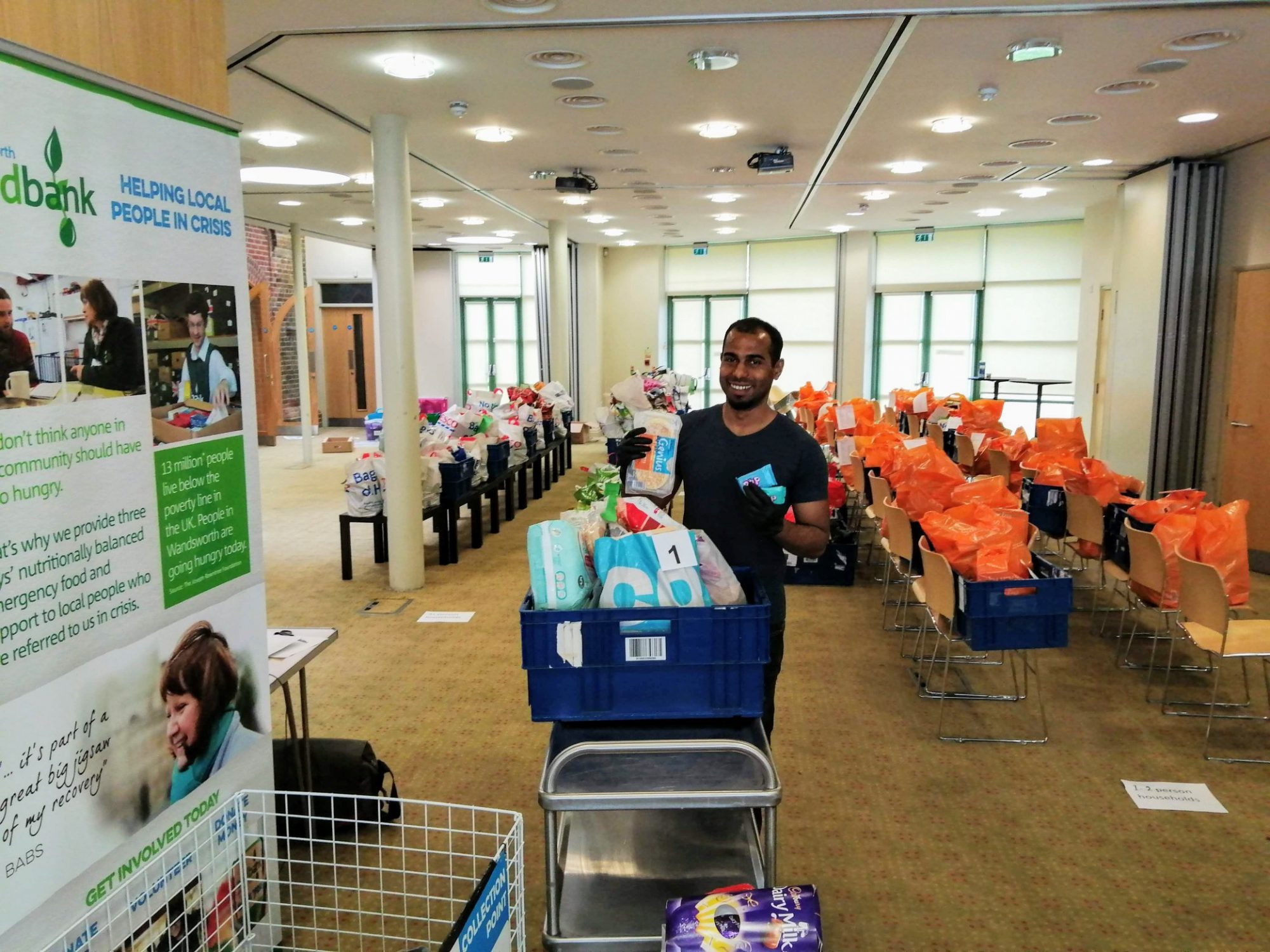
Wandsworth food bank has reported a record spike in the number of people using its services during the coronavirus pandemic.
The number of food parcels going to children has mushroomed by a factor of almost two-and-a-half, according to its data.
There was a 135 per cent increase in emergency food parcels given out across the borough during the last two weeks of March this year, compared to the same period in 2019.
By contrast, the Trussell Trust, which helps run scores of food banks like Wandsworth’s across the country, reported an 81 per cent increase in emergency food parcels across its network in the same period.
Wandsworth food bank manager Dan Frith said “We’re seeing people whose income has suddenly stopped or reduced significantly due to loss of work or illness.
“But even when people’s incomes haven’t changed, those on the lowest incomes have been hit hard by rising costs – for instance of children being at home, and by being forced to buy more expensive food than they would usually, because of rising costs and April’s empty supermarket shelves.
“One mother had to use the food bank for the first time after her monthly shopping bill doubled.
“She’d had to buy pasta for £1.70 a bag because the supermarket had run out of her usual 50p bag.
“Another mum of a child with special needs told us the price of nappies in her local shop had soared from £6 to £10. For some of us, our income can stretch temporarily during this time. For others, it can’t, and they’re pulled into extreme hardship.
“Now more than ever, people need an economic lifeline so they can weather this storm and come through the other side unharmed.”
Pam – not her real name – was also referred to Wandsworth food bank in April when her income from Universal Credit didn’t cover the cost of essentials.
Having worked for many years for public transport, Pam became too unwell to work.
But she was refused sickness benefits after a health assessment concluded that she was fit to work.
She has difficulty reading and writing and was not able to complete the forms to challenge the decision.
When the food bank team called Pam to arrange delivery of emergency food supplies, they also chatted through the problems she was experiencing, and arranged for the food bank advisor to telephone her.
The advisor is now helping Pam to appeal the sickness benefits decision, to try to maximise her income as someone with a long-term health problem.
Pam said: “I just needed a little bit of help. I’d worked all my life before I got ill, but Universal Credit treated me like nothing. I felt lost and alone, as if no-one was listening. I thought ‘I can’t keep living just off painkillers’.
“Money is very difficult at the moment, so it was really helpful to receive the food delivery – and to get a call from the food bank Adviser. She’s going to help me. I’m really pleased – it’s like a burden off my shoulder. They’ve all been so good to me, and so understanding.”